What happens when grief makes God feel distant?
Can tears become part of faith instead of proof that faith is failing?
Does God remain emotionally present when life breaks apart?
Can sorrow carry meaning without becoming a shallow lesson?
Where can Christians look when answers do not come quickly?
What if healing begins by understanding that God weeps with His creation?
Could a book about cosmic sorrow help someone face personal loss with deeper hope?
1. It Makes Facing Grief Feel Less Lonely
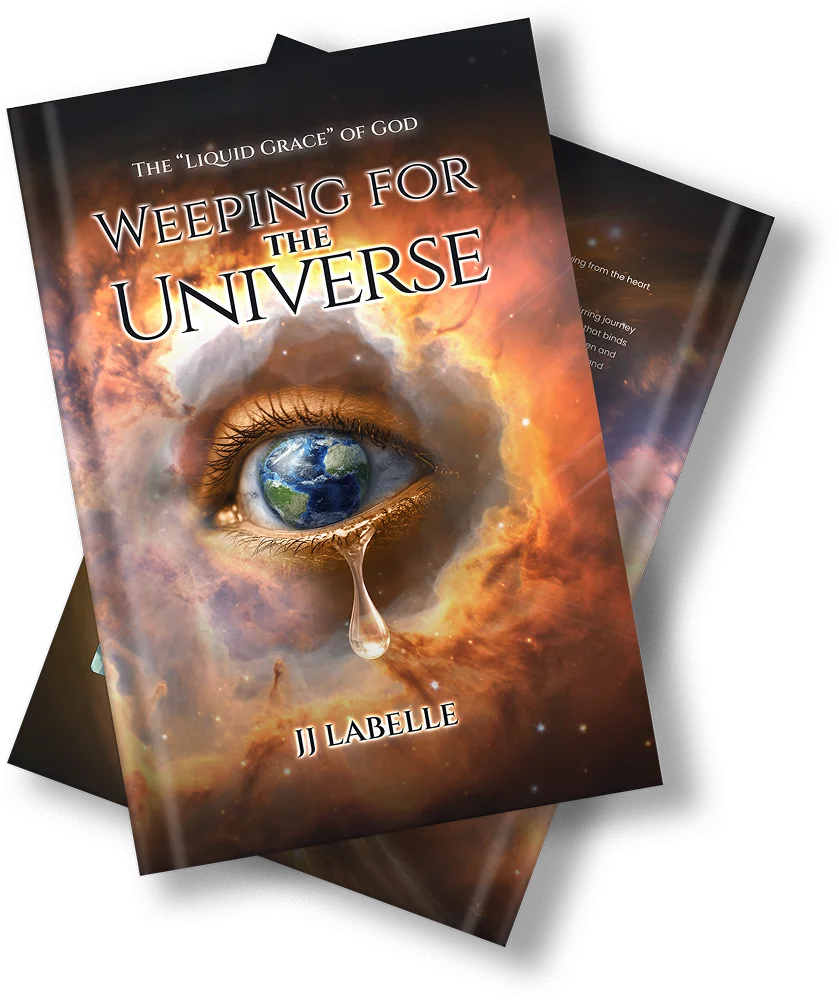
Grief often isolates people. Even loving friends may struggle to understand the depth of loss. In Weeping for the Universe, JJ LaBelle approaches sorrow through the idea of divine empathy, suggesting that God is not emotionally distant from human pain.
That idea matters when Facing Grief. The book repeatedly connects tears with compassion, mercy, and spiritual closeness. Instead of treating weeping as weakness, it presents sorrow as a deeply human response that can still exist beside faith.
For Christians who feel guilty for crying, questioning, or feeling exhausted, this perspective may feel freeing. The book creates room for grief without asking readers to pretend they are stronger than they are.
2. It Offers God’s Comfort in Grief Through “Liquid Grace”
One of the book’s central images is “liquid grace.” JJ LaBelle uses this phrase to describe grace flowing through suffering, tears, brokenness, forgiveness, and restoration.
For readers seeking God’s Comfort in Grief, the image is simple but memorable. Grace is not presented as something distant. Instead, it appears as something that enters wounded places and stays present.
The idea may help readers remember:
- Tears can exist beside trust.
- Grace can enter pain without denying it.
- Healing may begin before circumstances change.
This makes the book especially relevant among Christian Books About Healing, because it does not demand instant recovery. It gives readers permission to see healing as a spiritual process.
3. It Connects Personal Loss With a Bigger Story
Grief can shrink the world. After loss, everything may seem reduced to one absence, one memory, or one unanswered question.
Weeping for the Universe widens that view. It moves from creation and Eden to human rebellion, Christ’s suffering, resurrection, the Second Coming, and the New Earth.
That broad spiritual journey gives personal sorrow a larger setting. Readers are reminded that pain is not the entire story. Brokenness appears within a longer Christian narrative of creation, redemption, and restoration.
This is why the book stands apart within Christian Books on Grief and Loss. It does not discuss grief only as a private emotion. It places grief inside a cosmic story where sorrow and hope remain connected.
4. It Shows That Faith During Grief Can Include Questions
Many grieving Christians ask difficult questions they hesitate to say aloud. Why did this happen? Where is God? Why did prayer not change the outcome?
Author JJ LaBelle does not build the book around perfect certainty. The manuscript repeatedly asks questions about God, suffering, creation, sorrow, and mystery. It also admits that some truths remain beyond human understanding.
That approach gives Faith During Grief breathing room. Readers do not have to solve every mystery before they can trust God.
The book suggests that faith can continue while questions remain open. Sometimes peace comes not from knowing every answer, but from knowing where to carry the questions.
5. Christian Books About Suffering Bring Christ Close
Christian Books About Grief changes when Jesus is not imagined as watching pain from far away.
Weeping for the Universe often returns to Christ’s tears. The book reflects on Jesus weeping at Lazarus’s tomb, His anguish in Gethsemane, His suffering on the cross, and His compassion for a broken world.
This gives Christian Books About Suffering an important focus: suffering is not foreign to Christ.
Readers may find comfort in remembering that Jesus experienced sorrow, betrayal, pain, and loss. His tears do not cancel His power. Instead, they reveal love that enters suffering personally.
6. It Helps Readers See Grief as a Passage, Not an Ending
The book does not romanticize sorrow. However, it repeatedly connects weeping with what may come afterward: repentance, healing, purpose, resurrection, restoration, and joy.
That makes its message especially meaningful for readers seeking Christian Books About Hope.
The book’s grief journey moves through several spiritual stages:
- Loss reveals what matters deeply.
- Grace meets people inside brokenness.
- Christ brings redemption into suffering.
- Resurrection turns despair toward possibility.
- Restoration gives grief an eternal horizon.
This does not mean every wound disappears quickly. Instead, the book invites readers to believe that grief does not have final authority.
7. It Ends Where Many Grieving Hearts Need to Arrive: Hope
Grief and Loss Books should not rush readers toward happiness. It should walk beside them long enough for hope to become believable again.
Weeping for the Universe does that by ending with restoration. JJ LaBelle describes the New Earth as a place without death, mourning, pain, or crying, where fellowship with God is made whole.
For someone Facing Grief, that ending matters. Christian hope is not presented as positive thinking. It is rooted in the promise that sorrow is temporary within God’s larger story.
The book was written from a question born during prayer: does God cry for His creation? From there, it becomes a meditation on why suffering matters, how grace meets it, and where redemption ultimately leads.